
Swedish Comet News Goes Global. American Newspaper Science Desks Remain Untroubled.
Another Younger Dryas Impact Hypothesis paper catches the attention of international science media. And the beat goes on.

THE STUDY BEHIND THE STORY
One Swedish sediment core.Two distinct deposits.
A new round of coverage.
Well, well. Another Comet Research Group paper, another round of international coverage. The Tusk salutes the scientists pursuing this question for nearly two decades.
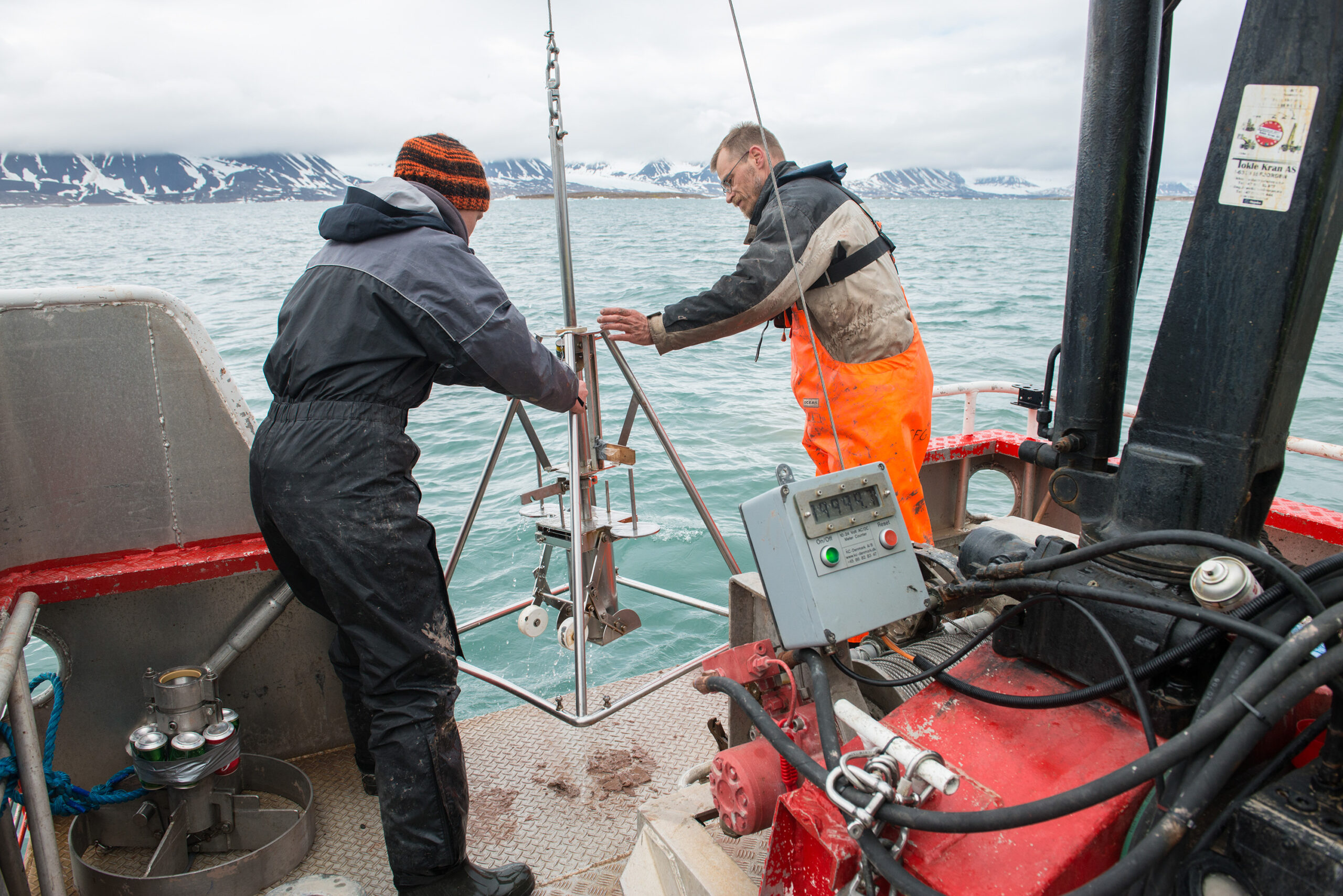
This time the news comes from southern Sweden, where Christopher R. Moore of the University of South Carolina, Simon A. Larsson of Stockholm University's Department of Physical Geography, and colleagues from institutions in Sweden, the United States, and the Czech Republic examined sediments dating to the beginning of the Younger Dryas, approximately 12,800 years ago.
The Swedish evidence
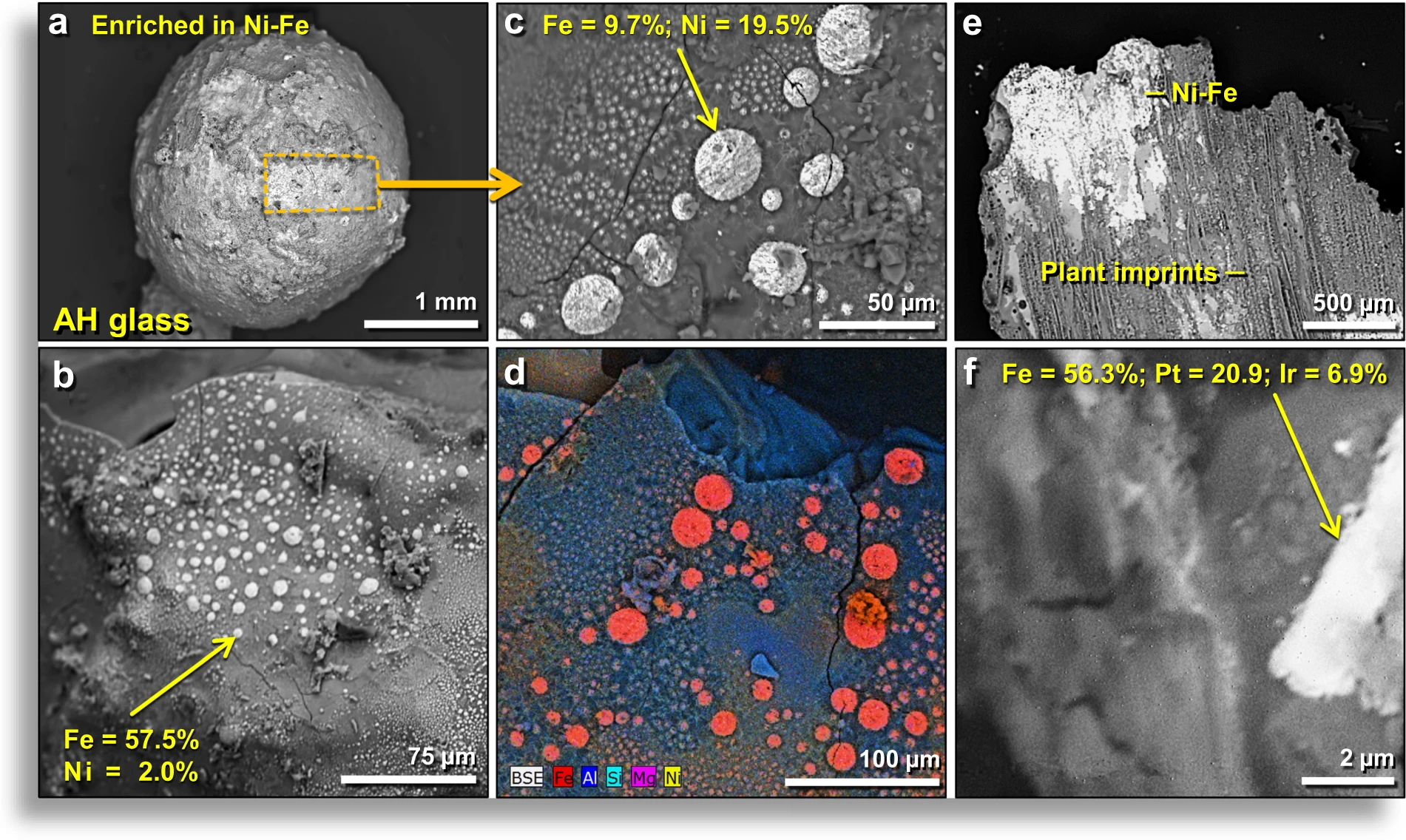
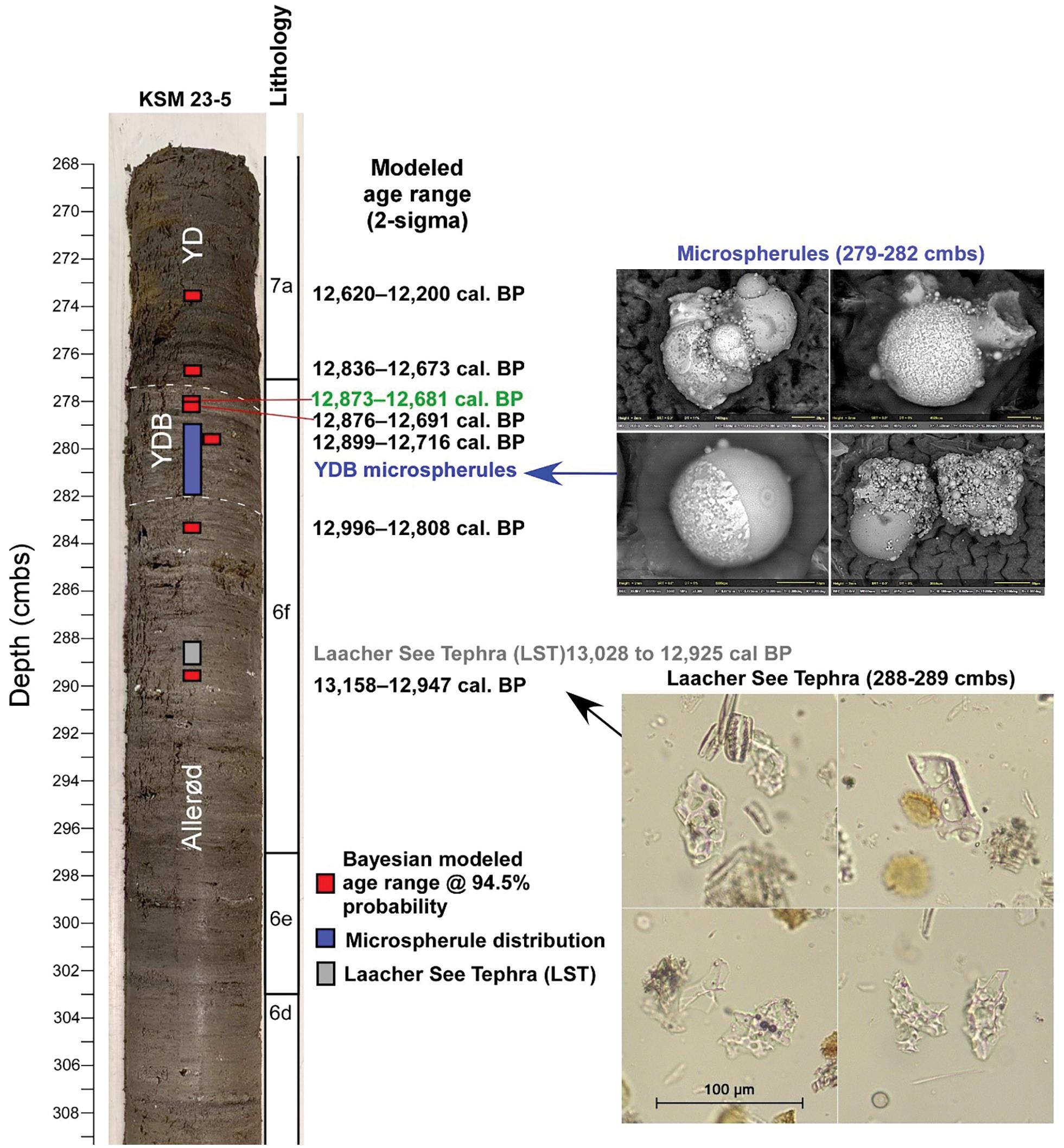
The researchers identified Laacher See volcanic ash beneath a separate layer containing abundant microspherules and anomalous platinum-rich particles, interpreted by the authors as possible extraterrestrial fallout. Their age model places the boundary layer approximately 150 years after the eruption, followed by colder, wetter conditions associated with the Younger Dryas.
The volcanic ash is down below. The anomalous boundary particles are higher up. That separation challenges attempts to explain the Swedish boundary material as products of the earlier eruption.
The interval is an estimate with dating uncertainty. This local sequence does not, by itself, establish what caused the cooling or settle the impact debate.
We covered the findings on October 7 in 150 Years Apart: New Swedish Evidence Challenges a Volcanic Explanation for the Younger Dryas, with the full paper and figures.
The story travels
The University of South Carolina’s October 23 announcement helped launch the latest coverage. Phys.org carried the university account; Earth.com’s Andrei Ionescu examined the mysterious particles in an article also distributed through AOL. Scienmag, Space Media Network, Above The Norm News, BrightSurf and Mirage News brought the findings to additional audiences.
These are not all independent investigations. Some are syndicated stories or university-release pickups. But that is how science news travels, and it is encouraging to see the research reaching readers.
THE STORY TRAVELS
From the core to the headlines
Selected coverage, October 2026. Publication does not necessarily mean independent reporting.
Articles & adaptations
University-release pickups
Our October 7 article also found a wider audience through a SOTT.net republication, credited to George Howard and the Cosmic Tusk.
Meanwhile, at the newspaper science desks...
Readers may remember our August 2025 post, Hot Comet News, Cold Shoulders from the Newspaper Science Desks. Research from Baffin Bay attracted specialist science coverage while the major American newspaper desks seemed uninterested.
There is a welcome exception: Zach St. George’s March 5, 2024 New York Times Magazine feature, The Comet Strike Theory That Just Won’t Die. We welcomed that extended examination of the hypothesis, its proponents and its critics. More of that, please.
Our targeted October 29 searches found no report on this Swedish study from the New York Times, Washington Post, The Guardian, Le Monde, Reuters or AP. That is a finding about this paper, not their entire Younger Dryas coverage, and our searches are not a complete audit. We welcome links we missed.
No endorsement required. Report the findings, interview the scientists, examine competing explanations, and let readers consider the evidence. The Tusk would applaud that journalism.
The people behind the international collaboration
This is a collaboration spanning Sweden, the United States, and the Czech Republic. The paper's author affiliations put names and institutions behind that international effort:
Read the paper · scroll inside the window
- Simon A. Larsson — Department of Physical Geography, Stockholm University, Sweden. His university profile describes his research on past climate and volcanic ash as a dating tool.
- Christopher R. Moore — South Carolina Institute for Archaeology and Anthropology, University of South Carolina, and the South Carolina Department of Natural Resources Heritage Trust Program.
- Mohammed Baalousha and Mahbub Alam — Center for Environmental Nanoscience and Risk, Department of Environmental Health Sciences, Arnold School of Public Health, University of South Carolina; Michael Bizimis — the university's School of Earth, Ocean and Environment.
- Gunther Kletetschka — Geophysical Institute, University of Alaska Fairbanks, and Faculty of Science, Charles University in Prague, Czech Republic.
- Malcolm A. LeCompte — Center of Excellence in Remote Sensing Education and Research, Elizabeth City State University; A. Victor Adedeji — the same university's Department of Natural Sciences.
- James P. Kennett — Department of Earth Science and Marine Science Institute, University of California, Santa Barbara.
- Julie Chouinard — CAMCOR, University of Oregon.
- Allen West and Timothy Witwer — Comet Research Group, Prescott, Arizona.
The Tusk salutes these researchers and their institutions. International collaboration is part of how this work gets done, and we hope other researchers see opportunities to bring their own expertise and institutions into the investigation.
Media attention is no substitute for scientific validation. But new findings deserve scrutiny—and readers deserve to hear about them.
Read the paper: Moore et al. (2026), Stratigraphic separation of Laacher See Tephra and a discrete Younger Dryas Boundary fallout layer in southernmost Sweden.