
Nearly 20 years on, a blinded study could mark a tipping point for the Younger Dryas impact hypothesis
A blinded investigation will revisit Younger Dryas boundary sites and examine additional impact markers, with researchers assessing samples before their depths are revealed.

Next September it’ll be 20 years since we published the original Younger Dryas impact paper. For nearly that long I’ve wanted to see a well-funded investigation like this one. I think it could be a tipping point in the debate. Hand researchers a set of sediment samples and keep the depths to yourself. Can they pick out the Younger Dryas boundary from what they find?
Let’s put this thing to bed.
Allen West tells me a blinded study is underway to examine a wider range of possible impact markers. The study has been generously funded with support from the Athanatos Foundation, enabling a more comprehensive investigation, including tests that were previously too expensive. This is work already underway, with the resources to pursue the broader research program.
Here’s why blinded studies matter. If you’ve worked at a site for years, you may know to the inch where you expect to find the boundary. That can influence something as simple as how long you keep looking through a microscope for one more spherule. In this study the researchers looking for spherules, platinum and other possible signs of an impact don’t know how deep the sample came from. In some cases they don’t even know the site. Once they’ve recorded what they found, the depths can go back alongside the results. Then we can see where those spherules and that platinum actually turned up.
How a blinded study works

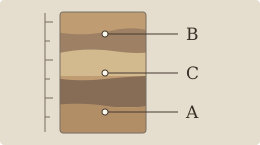
The team plans to revisit an appropriate number of the 50 Younger Dryas boundary (YDB) sites it has already investigated. This time the researchers can run two tests that used to be too expensive. They’ll measure the ratio of helium-3 to helium-4 and the ratio of osmium-187 to osmium-188. I’m particularly interested in what those measurements will tell us at sites where we already have a record of what’s in the sediment. The White Pond study gives readers a look at earlier sediment-core research on platinum and other evidence around the boundary.
There’s new ground to cover, too. One of the planned sites lies in the bed of ancient glacial Lake Agassiz. And the team is already looking at sediment cores from the Indian Ocean and the North Atlantic, both for the Younger Dryas boundary and for signs of possible impacts farther back in time. Allen’s early word was encouraging. As he put it, “so far, the results are positive for all of these.” I don’t have a site-by-site accounting or a publication date to pass along yet.
Tusk readers can count on us to follow every single development of this study that we’re allowed to share throughout the investigation, regardless of how it turns out.
I consider the Younger Dryas impact the most important thing that ever happened. For nearly 20 years we’ve argued over the evidence in that layer. What keeps me at it is the bigger question of what happened to us. After 500,000 to a million years, things changed for our ancestors. I’ve come to think that, for one reason or another, the human line was traumatized to civilize.
That’s why I get the feeling that dollars spent on independent research like this are almost certainly the most productive dollars anyone has ever spent to learn the true history of humankind. Now we get to go back to the sediment and ask what happened.