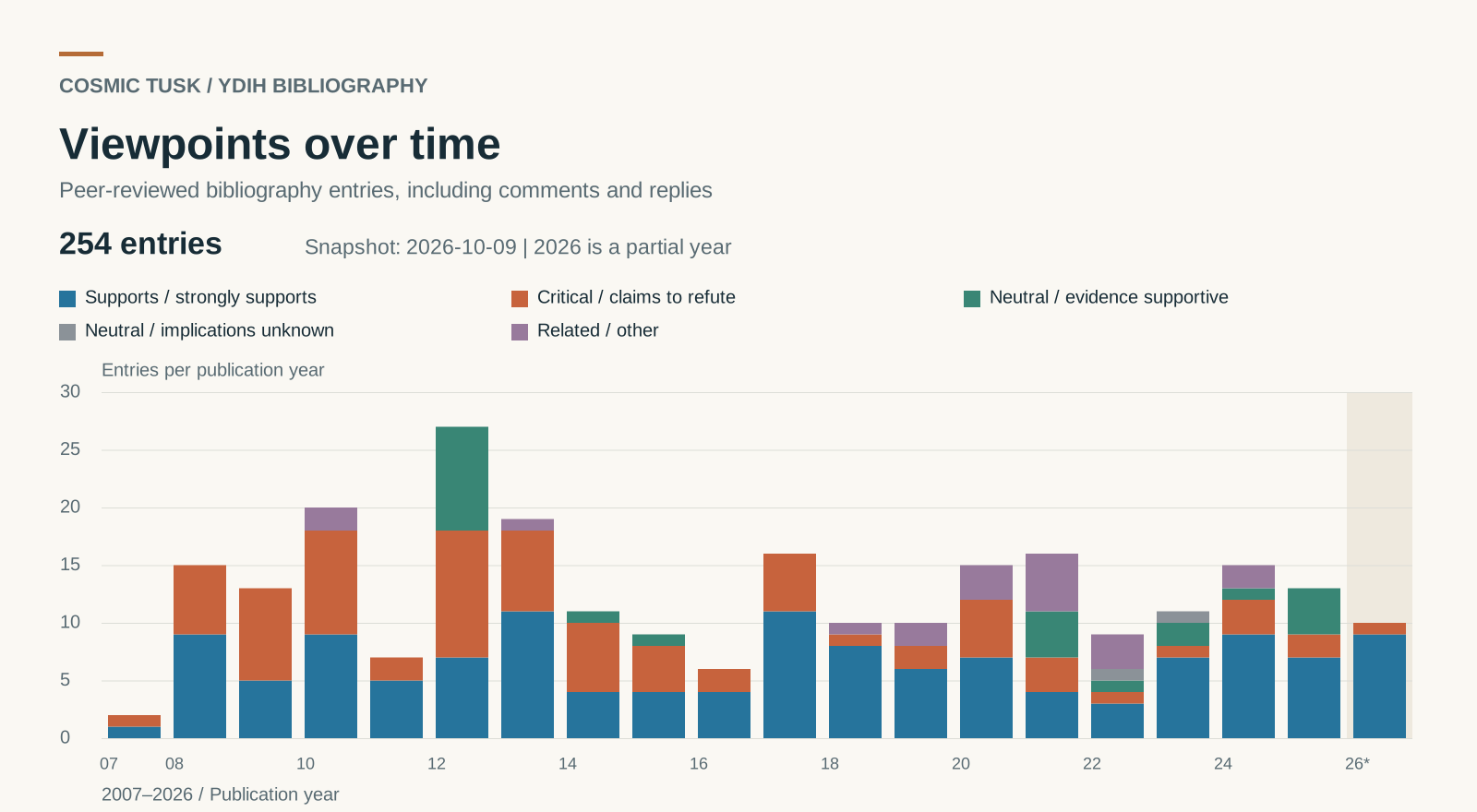

See the layer: Introducing the Dirt Bib
What does a black mat actually look like? Explore the Tusk’s new searchable photo gallery, beginning with clear exposures at Murray Springs and Blackwater Draw.
We talk a lot about the Younger Dryas boundary here at the Tusk. But if you’re new to the subject, it helps to see the ground we’re talking about.
So we’ve assembled a Dirt Bib: our visual companion to the literature bibliography, with field photographs and a distinct soil and sediment-core section drawn from the Tusk archive, research papers, and presentations, with the clearest examples up front. Here are two places to start.
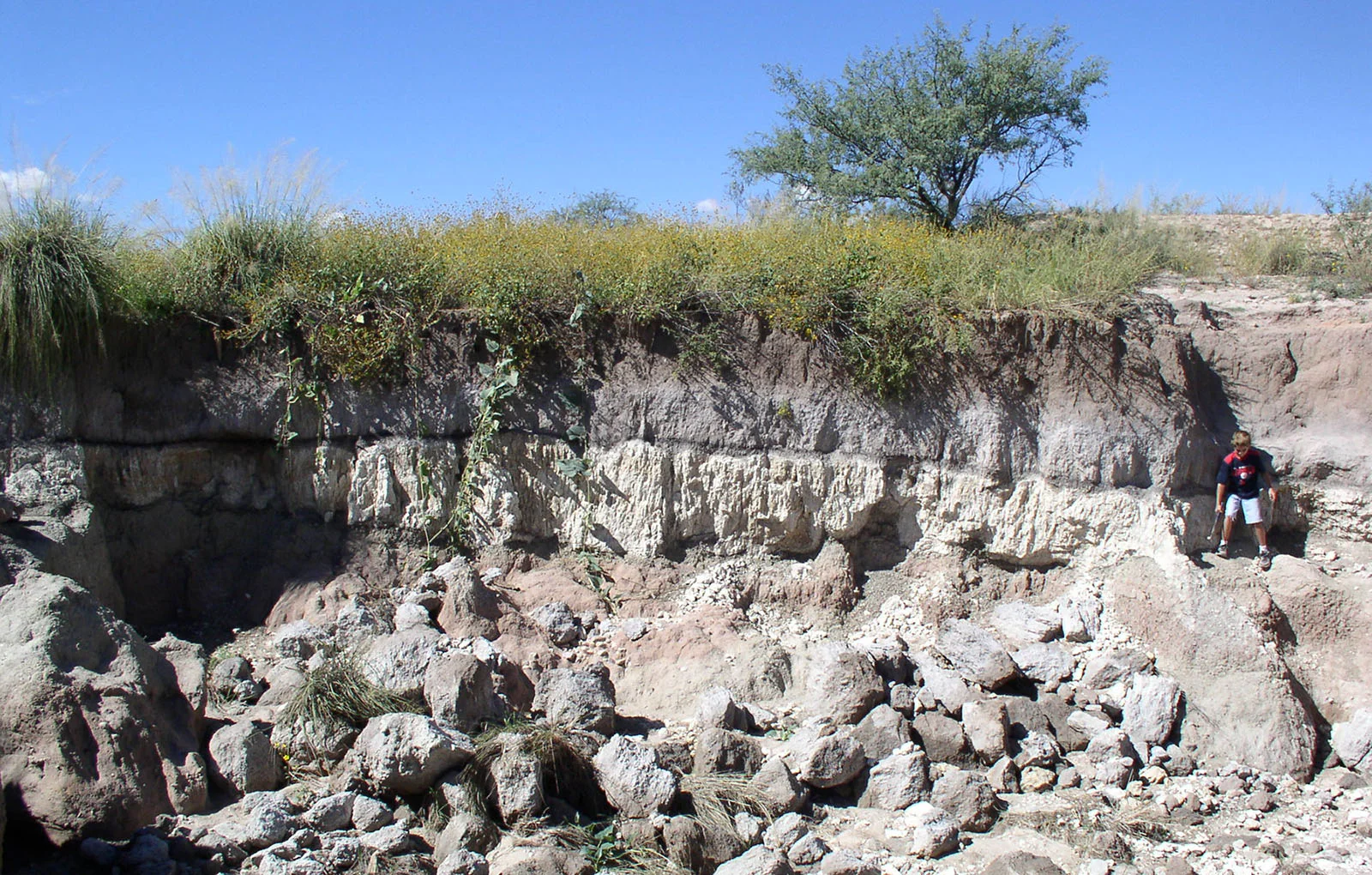
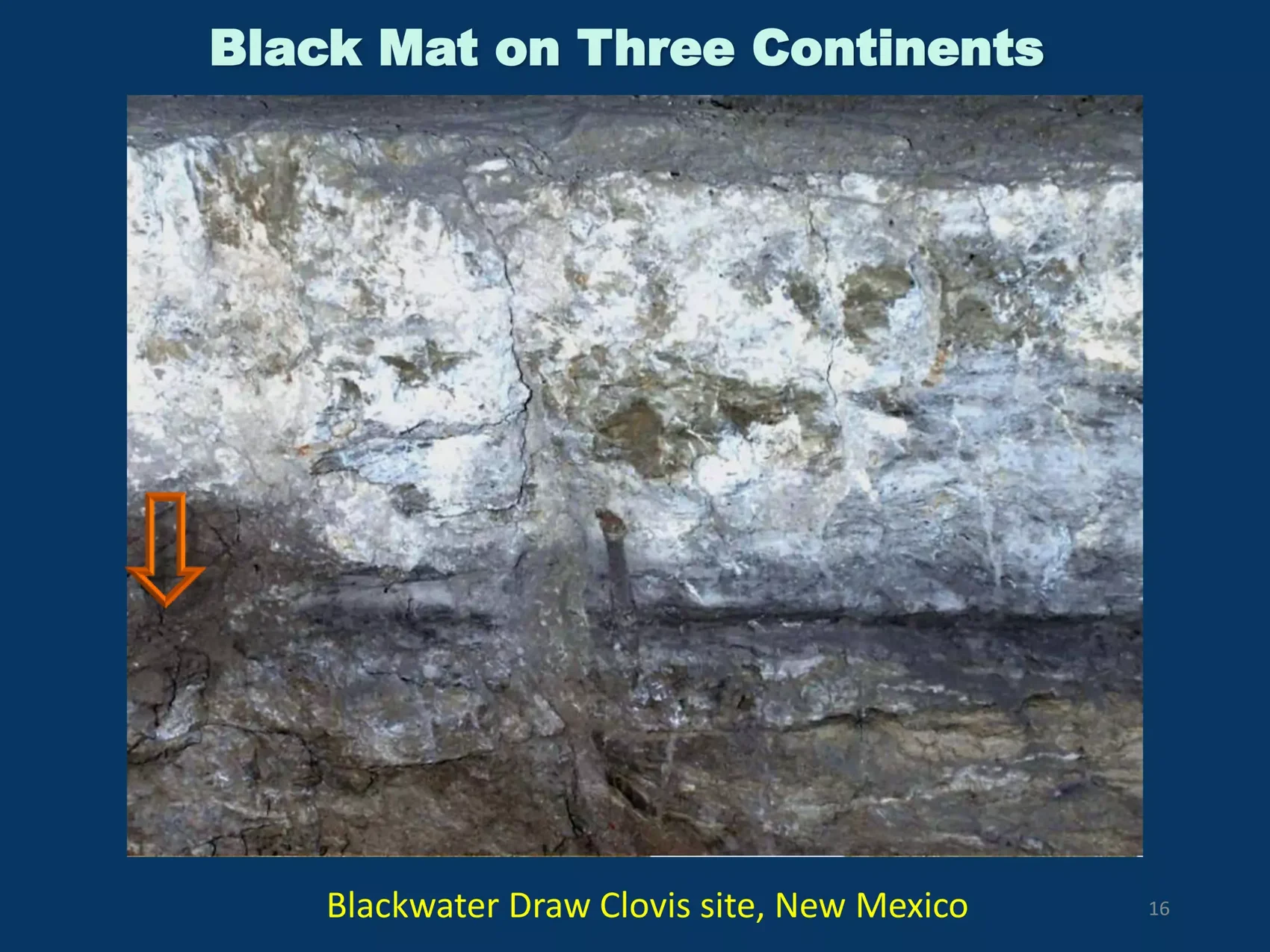
The gallery brings together field photographs and annotated profiles from dozens of sites. Search by place, compare different exposures, enlarge the photographs, and follow links to their sources. Notes distinguish proposed boundary layers from older or younger black mats: a dark band alone cannot tell us its age or how it formed.
It’s a visual companion to the blinded replication study now underway, and a starting point for anyone wondering what researchers actually sample. You can also find it anytime under Resources.